FMF
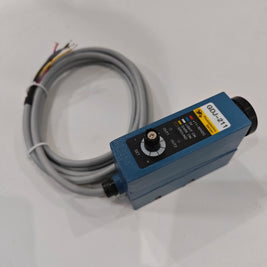
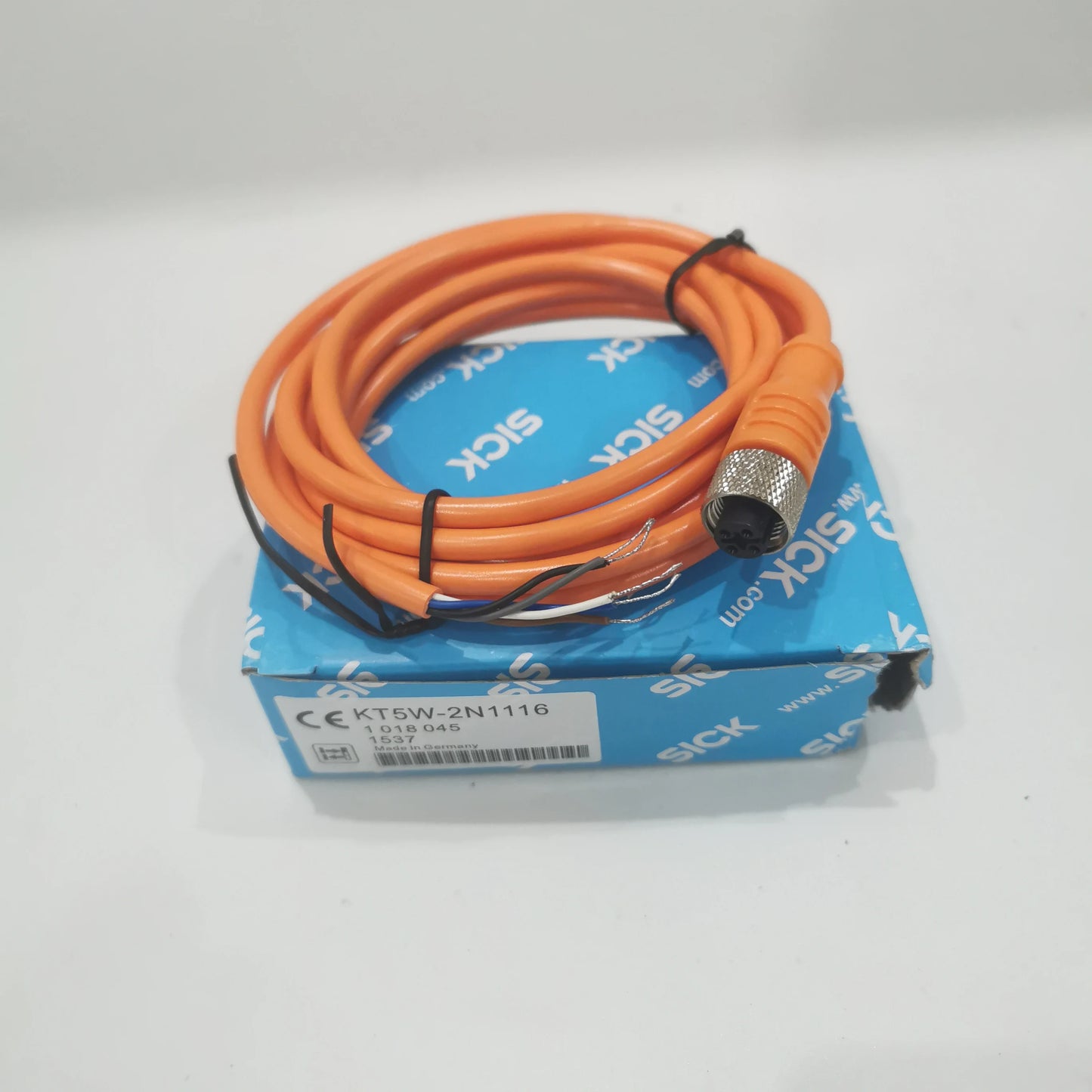
KT5W-2N1116 Contrast Sensor Color Mark Sensor with Cable
Couldn't load pickup availability
KT5W-2N1116 Contrast Sensor
The KT5W-2N1116 is a contrast color mark sensor used for detecting printed marks, registration marks, and contrast changes in industrial automation and packaging-machine applications. This listing includes 1 pc KT5W-2N1116 sensor and 1 pc cable.
Key Details
- Model: KT5W-2N1116.
- Product type: contrast sensor / color mark sensor.
- SKU: FMF-KT5W-2N1116-87865.
- Included: 1 pc KT5W-2N1116 sensor + 1 pc cable.
- Use: mark detection, contrast detection, and registration-sensor applications where the machine needs to distinguish a mark from the background.
Technical Specifications
| Item | Specification |
|---|---|
| Light source | RGB LED. |
| Wavelengths | 470 nm, 525 nm, and 640 nm. |
| Sensing distance | Up to 10 mm from the leading edge of the lens. |
| Light spot size | 1.2 mm x 4.2 mm. |
| Adjustment | Teach-in button; static 2-point teach-in. |
| Supply voltage | 10 V DC to 30 V DC. |
| Switching output | NPN. |
| Switching frequency / response time | 10 kHz / 50 us. |
| Connection | M12, 5-pin plug. |
| Housing / protection | Zinc diecast housing, IP67 enclosure rating. |
| Operating temperature | -10°C to +55°C. |
| Weight | Approx. 400 g. |
Selection Notes
Confirm the exact KT5W-2N1116 model, NPN output requirement, M12 5-pin wiring, sensing distance, and machine input before ordering. If cable length or connector orientation is critical, compare the supplied cable shown in the product photos with your machine wiring requirement.
FAQ
What is this sensor used for?
It is used for contrast and color mark detection, such as detecting a printed mark or registration mark against a background.
What power supply does it use?
The sensor specification lists a 10 V DC to 30 V DC supply voltage range.
What output type does this model use?
This KT5W-2N1116 listing is for an NPN switching-output model.
What is included?
The listing includes 1 pc KT5W-2N1116 contrast color mark sensor and 1 pc cable.


You may also like
-
EPC-A10 Servo Web Guide System with PD-803L200 Actuator and US-500 Ultrasonic Sensor
Regular price $1,152.21 USDRegular price$0.00 USDSale price $1,152.21 USD -
EPC-A10 Servo Web Guide System with Color Mark Sensor
Regular price $692.59 USDRegular price$0.00 USDSale price $692.59 USD -
EPC-A12 Web Guide Controller Kit with Sensor and Servo Actuator
Regular price $677.86 USDRegular price$0.00 USDSale price $677.86 USD -
GDJ-211 Color Mark Photoelectric Sensor GDJ211BG for Bag Making Machines
Regular price $51.28 USDRegular price$0.00 USDSale price $51.28 USD